(This was written late last year; I pitched it a few places but received little interest. I’m posting it here because, well, it’s an important conversation.)
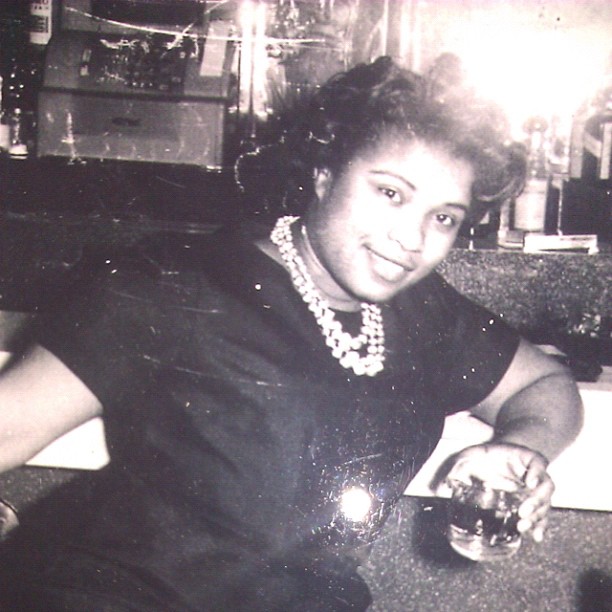
Mom, back in the day.
As I write this my mother is fast asleep in a nursing home, her third stint in 15 months. It is a heartbreaking thing, watching your parent slowly succumb to her mortality. You try to prepare yourself for the call you’ll get in the middle of the night from a nurse reluctant to give you the news you’ve been dreading for years. But no amount of preparation will ready you for that call. No amount of alcohol will lessen the pain. Even writing about it is hard because it forces you to deal with an absolute, inescapable truth. She is dying, and you are powerless to stop it.
The woman I now visit several times a week is not the woman I knew five years ago, or even three years ago, when she bounded into my maternity suite with her walker, perching herself on the sofa while ordering my husband around. She is an entirely different creature, one who will ask me the same question in a five-minute span, one who is petulant and stubborn and scared. She is not the Joan who raised me, and it is difficult to reconcile this version with the one I knew. The one I miss. I watch my other friends in envy as they travel the world with their healthy, able-bodied parents, as those parents gift them with cars and weddings, top-shelf appliances and Maclaren strollers.
As a junior member of the Sandwich Generation, I’ve been my mother’s primary caregiver for the last several years, a responsibility passed on to me when my brother and his wife retired to Phoenix. A changing of the guard, so to speak, because they’d spent over 20 years juggling full-time jobs, mortgage payments and ailing elders. Statistics will tell you that the average Sandwicher is older, whiter and affluent, which makes my case somewhat unique (I suppose) because I am none of those things. Earlier this year, when my husband was laid off after 14 years of what should be considered indentured servitude, our financial situation went from “meh, it could be worse” to “oh, this is what abject poverty feels like.” If money wasn’t going to toddler care, it was going to one (or both) of our mothers.
But what I’m doing now is no different from what my brother was doing ten years ago, no different from what our mother was doing over 20 years ago when she moved my grandmother into our spartan three-bedroom apartment on Chicago’s south side. In fact, my situation isn’t a unique one at all, because growing up I was surrounded by women who lived as we did; three-to-four generations sharing 800 square-feet. For most poor/working-class single women of color, this is a familiar, albeit depressing, narrative. My mother was raising a 12 year-old and a 67 year-old on barmaid’s wages and public assistance. Her friend Mona was using her barmaid’s wages to provide for her college-bound son and a mother in a nursing home. Another friend, Sally, was raising a gaggle of kids and grandkids on Sunday dinners she’d sell from her window. Though they all made it work, there were doubtless physical and emotional strains that would manifest in the years to come.
As much as we love to pathologize the black inner-city experience, there was—is—a love that is real. Present. Corporeal. Etched in frown lines and callused hands. Displayed by women whose sense of love and obligation pushed them to their limits. According to this study on cultural diversity and caregiving, African-American caregivers had lower levels of caregiver burden and depression than their white counterparts. Given that depression is fairly underreported in the black community, I find this hard to believe. While some reports show Americans being generally averse to elder caregiving, others show just how ingrained it is in the black community, mainly because we cannot afford it. And we’re less likely to entrust the care of our Willa Maes to state institutions or private facilities because of the increasing number of abuse cases.
As writer Jane Glenn Haas pointed out, eldercare isn’t sexy enough to be a feminist issue. It lacks the naughty allure of reproductive rights, the seductive appeal of body image. It doesn’t even have a sassy Lean In-like catchphrase. But it should be a feminist issue, since the numbers show that women are most likely to shoulder the responsibility of looking after parents in their twilight years, and the most likely to live well into those twilight years. A lot of them have missed out on career and educational opportunities. A lot of them—like my mother and her friends—are doing this by the skin of their teeth, with scant to nonexistent resources. A lot of them will outlive their spouses (if they have them), exhaust their pensions (if they have them), and die alone.
All of this begs a stronger push for policy changes that no longer penalize women for making the choice to care for their elders, a push for making more resources available to help them. Innovative programs like CAPABLE can not only ease the burden of caregivers, but empower the senior citizens who need the care and improve their quality of life. But in order for this country to realize the importance of this issue, we need more voices—big and small—to amplify it.
 hoodfeminism
This is a wonderful piece. Thank you.
Reblogged this on I Heart Photos.
This is so true. And it will escalate dramatically over the next 10-20 years. It’s going to be brutal if it isn’t fixed. And soon.
Lovely work.
Amen to all of this. I have witnessed this first hand. My grandmother raised me. At times my mother lived with us. And when I was a teenager, my grandmother also had to take care of her elderly parents, both of whom had Alzheimer’s. I don’t know how she did it.
As writer Jane Glenn Haas pointed out, eldercare isn’t sexy enough to be a feminist issue.
Tell me about it. But then again, neither is child care. Basically, anything that recognizes that women live in community and often have caregiver roles (whether embraced or tolerated on the damned-if-you-do, damned-if-you-don’t basis). Classism and racism all wrapped up in the same shiny bow; must be a day that ends in “y”.
This was a great piece. I’m sorry you couldn’t market it to a paid venue; in fact that really pisses me off. In my world, your situation is ubiquitous; I know very few people over the age of forty (and a few under) that aren’t in or haven’t dealt in the past with being part of “the sandwich generation”. Been there, done that, and thank Maude my mother’s last words to me weren’t “fuck you” (she was in the end stages of cancer w/cancer-induced dementia, and still in denial about her cancer). She lived over a two-hour one-way drive away, and I’m a single mother with a full-time and a part-time job. Her insurance wouldn’t cover anything where I live (no outlets for that particular HMO), and there wasn’t any work where she lived (so I couldn’t go there). I had to settle for driving over-and-back a couple times a week. It was tough. She was in such bad shape at the end—and she was hard to recognize, physically as well as mentally (before she lost the ability to speak, she lost the ability to string together a sentence in a way that made any sense; “word salad” in between hallucinations). What she really needed was hospice, but she denied that she needed it. She was going to live forever. I searched the internet for timelines on dying from hospice websites.
I don’t think anybody’s ever really prepared for that call. I handled it the way I handled every other major trauma; tunnel vision, and an all-business attitude. I threw some clothes in a bag for me and my daughter and went over. It was 24 hours later that she died; I think she was waiting for my daughter to be gone (my aunts took her out to lunch).
It’s going to get a lot worse; look how few women in Generation X have pensions. Even fewer Millenials. And they don’t earn enough to make ends meet now, let alone adding a medically challenged elder into the mix. What does it mean to have FMLA when you can’t get paid for the caregiving?
This is so important. I reposted on my Twitter account and reblogged on my blog.
Yes, an important issue.
Many elder issues are ignored in the mainstream and also in the left and feminist press.
Did you try “The New Old Age”? Tell WAMmers, please.
Thank you for writing this article for this under reported feminist issue.
As someone who was the caregiver to both my parents, the last decade has been a struggle leaving my life in tatters from which there will be no recovery.
…”African-American caregivers had lower levels of caregiver burden and depression than their white counterparts”… that statement alone discredits this study by under-minding the author’s level of competency in properly addressing the contextual psychological state of participating subjects.
I took exception to that statement for it denies a basic level of dignity by undervaluing the African-American caregivers understanding of their current dire situation. I personally appreciate your attention to that statement and respectful concluding commentary.
Thanks for this piece. Similar discussions have been going on here in Australia, with older women now becoming homeless after being carers. Breaking my heart that we can’t value care.
Excellent piece. I cannot agree more. Thank you for giving this topic some of the attention it deserves.
Wow. Thank you.
I randomly found this post and just wanted to let you know that I appreciate this piece of writing! I watched my mother take care of my ailing grandmother when she herself had no job. We as a family had to come together and pitch in time and money to take care of her…and we would do it all again. It truly was one of the most crucial times. My grandmother was like a mother to me and watching all of her children and grandchildren come together to make sure she was in a good, loving place, was so important at the end of her life. You’re so right, this is an issue that needs more exposure, needs more eyes and hearts to really understand what it takes. I don’t know what has happened to your mother since writing this, but I hope that there is some solace in all of this for you both. Once again, great read!
Loved this! So glad that you are highlight such an important topic 🙂
*definitely meant “highlighting”
Thank you again for this piece. As one who is in the middle of it, I know the pain of caring for an elder and in my case, one who has a fair amount of denial as to her abilities. Nobody really gives you a manual when you become a parent for the first time, and nobody gives you a manual on how to care for your elders when it’s time. Both my husband and myself are just muddling through, making mistakes, and seeking forgiveness when we step on toes. Which is bound to happen. Thankfully there is love on all sides, but nobody is particularly happy with the state of affairs – not our parents and not us.
Reblogged this on Niki.V.all.ways.My.way. and commented:
very important!
Reblogged this on Milieu de la Moda.
I too just randomly found your post. I am sitting at home in England and so feel for you. You have written so beautifully and from the heart. I’d just like to send you a big hug. Your Mother was indeed a beautiful woman. God bless. Eily xxx
This is an issue often put on the back burner. We avoid it because it is so painful. Good piece.
You have expressed in a loving way the hardship of watching your loved parent slip away. Your mother is proud of you even though she can’t express it the way she had before. Thank you for sharing.
Maybe it will not be forgotten and many will read this awesome blog and make a change!
This is a very worthwhile subject to blog about. In my own case it was both my husband and I who took care of both sets of parents, even though my husband has serious heart problems himself. We spent over 25 years with this responsibily and believe me, it’s hard.
Reblogged this on Passion Rises Again~ Blog and commented:
A subject that needs to be addressed.
Touching and heart-wrenching. Thank you for writing it and posting it.
Thank you for your beautiful honesty! I hope telling your story takes a little of the burden away.
Reblogged this on The Student Becomes The Teacher.
Hugely important issue and something very relevant for my family at the moment. Well written piece. Hope it does get on the government agenda one day
Thank you for sharing your story.
The problem of race and gender inequality is something which we cannot even hope to solve if we are not understanding of the real consequences of this inequality.
I am deeply upset to hear that you are struggling, and that your mother is unwell. I see my grandmother following a similar path at the moment and so can empathize with your situation. I wish you all the strength and courage you need. K x
Yes. Yes, yes, yes.
Reblogged this on My Blog.
Reblogged this on Mindful Musings at Midlife and commented:
Having just lived this (with white skin) i can totally relate. This is a subject that needs to be brought into the light of day and resources made available to those women taking care of it all.
Congratulations on being Freshly Pressed. Surprised this was declined for publication. That’s really unfortunate, I already know two other people who would enjoy your work here.
Thank you so much for sharing your story with us. I echo another comment when she said your mom is proud of you she is definitely proud of you and so are we . I only pray that one day I have your strength and courage to care for my parents the way you looked after your mom . May God bless you and keep you and continue to give you strength
This was hard to say but needed said.
Wonderful piece. I am also a younger caregiver and find that it frustrating how everything I read seems to assume an older caregiver and a certain affluence that goes with that. Your discussion of race and caregiving is something that I would like to read more about. I have been fascinated by how much my caregiving choices are considered unusual in some circles and just what is expected for other friends of mine. I definitely want to read some of the links you posted, thank you!
Reblogged this on sabaessam.
Very important issue. Many are also raising grandchildren.
I appreciate your wonderful post. As someone who works in eldercare, this really hit home for me. It really makes you think.
This is a great piece, thanks for sharing. The picture of your mother is beautiful.
This is a very important piece. I am English and white but the situation you describe is also common in this country. We have an ageing population and the government is selling off care homes, cutting back on Adult Social Care Services and caring services for the elderly. I looked after my mother with some paid help until a few months before she died. I am so sorry for the situation you find yourself in. You are absolutely right there must be policy changes.
Caring for elderly parent should be a primary concern on everybody’s mind. Elders are on loan to us and we must make sure we are able to extend a safe and loving world to them, as they did for us, during our infancy years. Laws and programs should recognize that the growing cost of medical care is unreasonable to afford for the elderly let alone their struggling children. This is a shared responsibility with the state.
Reblogged this on jingdleon.
Thanks for so simply and powerfully articulating the necessity of caring for our parents, our elders, our community, within the inadequacy of the system. Posts like these promote positive change!
Reblogged this on a girl named frank and commented:
This is a great, and yes important piece.
Reblogged this on Apps Lotus's Blog.
Great read! I have never thought about putting my parents in foster care. I have always thought of having them live with me or rotate them between myself and my brothers. If my parents are able to live on their own then cool if not I cannot see it any other way but for them to stay with me!